
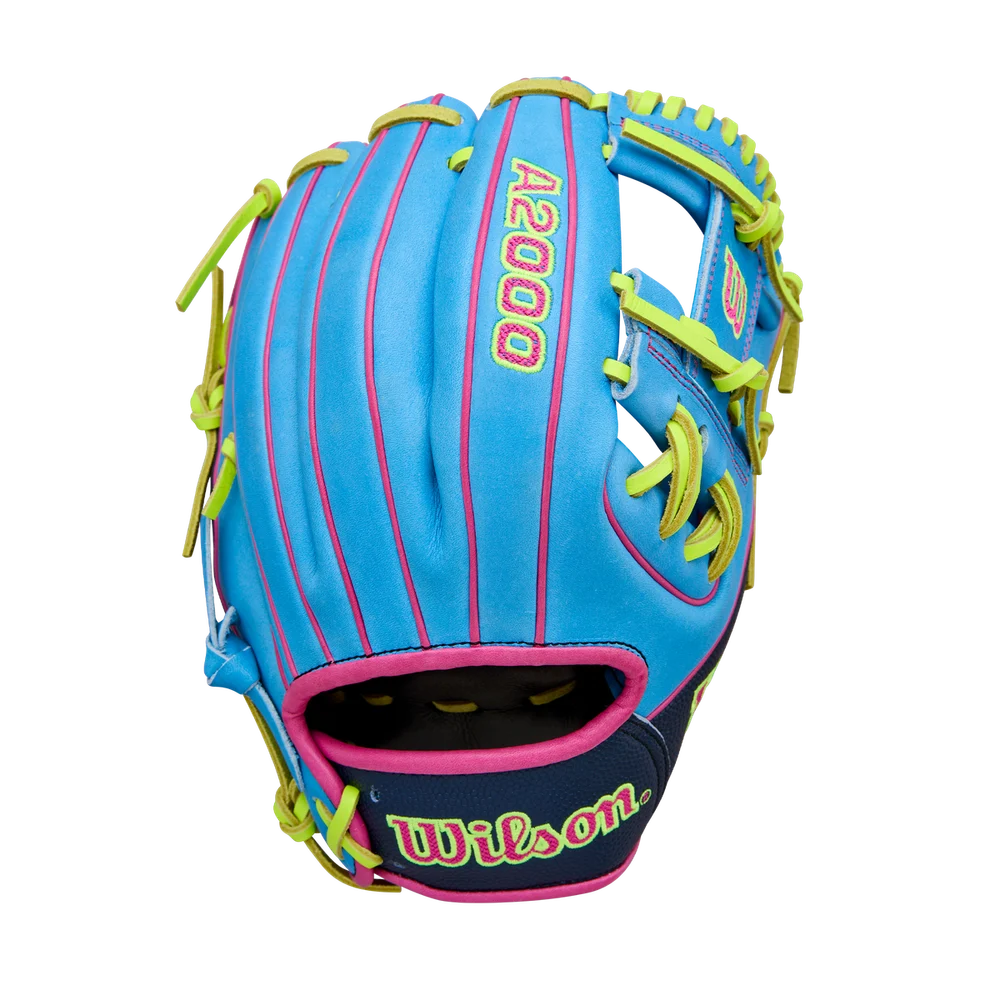
The quick answer
Begin with the instructions for your exact glove. Work the intended hinge areas gently, shape the pocket around the appropriate ball, and play catch in short sessions. Use only a compatible treatment in the amount the maker recommends. We do not recommend ovens, microwaves, or improvised heat shortcuts.
Step by step
Check the materials and instructions
Identify the exact model and whether its shell includes synthetic panels. Use its manufacturer’s directions before applying water, oil, or conditioner.
Work the closing points
With the glove on and off your hand, gently flex the areas where the heel and thumb/pinky sides are designed to bend. Preserve the overall structure.
Shape the pocket
Use the ball appropriate for the glove’s intended sport and position. If the maker recommends a mallet, use it to form the intended pocket rather than flattening the whole glove.
Play catch and reassess
Use controlled catch sessions to feel where the glove still resists closing. Adjust gradually and check the same hand and finger placement each time.
Decide on the pocket before you soften it
An infielder seeking quick access to the ball may want a different pocket from an outfielder. Start with the glove’s intended pattern and the way you put your fingers into it. Break-in can personalize that pattern; it cannot turn an unsuitable glove into every other type of glove.
For softball, use the intended softball when assessing the pocket. Closing a glove around a smaller baseball does not answer whether it handles the larger ball comfortably. The same principle applies to choosing a specific catcher’s or first-base mitt.
Follow the maker when methods differ
Manufacturer instructions are not identical. Wilson describes a controlled warm-water method in its own break-in guide; Rawlings advises against steaming, boiling, baking, and heating a glove. That difference is why we do not recommend a universal water or heat routine for every brand and material.
If a glove has mixed materials or a special finish, ask the manufacturer before using a treatment intended for ordinary leather. Keep the relevant care directions and purchase receipt together. A video about a different glove is not a reason to disregard the instructions for yours.
Keep conditioning separate from pocket work
Conditioner is a material-care product, not a substitute for shaping and use. Apply only what the compatible product and glove maker specify. Saturating a new glove can change its weight and feel without solving the actual closing problem.
If the glove already feels supple, concentrate on its intended hinge and pocket rather than adding more product. An old glove that needs maintenance and a new glove that needs break-in are different situations.
Know when it is ready for a game
Use the glove in normal practice before relying on it in competition. Look for repeatable opening, secure catches, and comfortable access to the ball. If you are still fighting the glove to close it, keep working gradually instead of using a fixed number of days as the deadline.
Persistent fit problems deserve a second look at size and hand opening. Extra break-in will not necessarily fix a glove that is simply too large for the player. A coach or qualified glove technician can help assess a stubborn pocket or damaged lace.
Your questions, answered.
How long does a glove take to break in?
There is no reliable universal day count. Leather, pattern, stiffness, use, and the player’s preferred pocket all affect the process. Judge readiness in practice.
Can I put a glove in the oven?
We do not recommend it. Rawlings explicitly advises against baking and other heat shortcuts; follow the directions for your exact glove.
Should I soak every new glove?
No. Some makers describe controlled water methods, but that does not make soaking suitable for every glove or material.
Can I break in a softball glove with a baseball?
For assessing and shaping the final pocket, use the ball appropriate for that softball glove and position.
Sources & further reading
Rawlings: glove break-in guidance ↗Wilson: glove break-in and pocket shaping ↗Walden Glove: conditioning and leather care ↗Sources reviewed . For equipment care, follow the instructions for your exact model. For competition use, check your governing body’s current rules.